10 Ways to Use Your Local Sharing Economy For Free
The strength and durability of our communities depend on the interweaving threads of their fabric. As neighbors and friends, we choose how to build our community and be part of it. The local sharing economy and gifting economy are great ways to make our communities stronger and more connected.
The more we participate and engage with our local communities and neighbors, the stronger and more resilient our communities become. There are infinite ways to be a valued member of your local community. Check out these ten ways to participate in your local sharing economy and gifting economy for free.
This is part of our How To Master Secondhand Shopping Resource Guide.

There’s a version of community resilience that doesn’t require any money, special skills, or grand organizing effort. It just requires knowing your neighbors and being willing to ask for what you need and to offer your abundance when you can.
That’s the heart and soul of the local sharing economy. There’s no magic app, platform, or economic theory. Just neighbors exchanging what they have with other neighbors who need it. The apps and platforms exist to make that easier, but the impulse underneath them is as old as neighborhoods themselves.
I’ve been participating in various forms of local sharing and gifting economies for years. More than the stuff exchanged, the relationships impress me. Slow accumulation of small interactions turns a street of strangers into something more like a community.
I appreciate the neighbors I meet through our local Buy Nothing group. Periodically, we meet in a new setting, and someone says, “I recognize your name from the Buy Nothing group!” That small connection comes with a smile, a note of commonality, and makes the introduction feel warmer and the connection a little deeper.
What’s the difference between a sharing economy and a gifting economy?
A sharing economy is a system in which people share resources. Neighbors might split the cost of a piece of equipment they both use occasionally. A community tool library, where members borrow rather than buy the tools they need, is a great example of this. The public library is the OG of the sharing economy at scale, and there are so many creative iterations.
A gifting economy is specifically about giving and receiving for free, with no expectation of direct exchange in return. The Buy Nothing Project is the clearest example: neighbors give items they no longer need, request items they need or want, and trust that the generosity flows in both directions over time.
In practice, sharing and gifting economies overlap. Both reduce consumption, save money, reduce waste, and, maybe most importantly, create the kind of repeated small interactions that turn neighbors into people who actually know each other.
8 Ways to Use Your Local Sharing Economy For Free
Right now, when economic uncertainty is real, and the systems we rely on feel less stable than they used to, having neighbors you can turn to and resources you can share is no small thing. The local sharing economy (and gifting economy) offers a foundation for fostering neighborly relationships that feel increasingly vital every day. Here’s how to start (or continue!) building that in your neighborhood or town through the local sharing economy.
1. Join a Buy Nothing group
My first stop in the sharing/gifting economy is your local Buy Nothing group, full stop. Buy Nothing groups are hyperlocal gifting communities organized by neighborhood, where members give away items they no longer need and request items they do. And it’s all for free. They’ve grown significantly in recent years and now operate through both Facebook groups and the dedicated Buy Nothing app, which is worth downloading if you prefer to stay off Facebook.
Buy Nothing groups find their real power in the connections, even though it’s built around the exchange of goods and services. They provide a structured, low-stakes reason to interact with people who live near you. The groups encourage making requests, offering your abundance, and showing up at each other’s porches for pickups. These exchanges sometimes turn into actual conversations (in the moment, or at a later date when you both realize you’re members of the same group). I credit my local Buy Nothing group with teaching me how to ask neighbors for things, a skill that has since spilled well beyond the app into my actual neighborly life.
[→ Here’s my complete beginner’s guide to Buy Nothing groups. It offers everything you need to know to get started.]
2. Find or start a tool library
Did you know the average power drill gets used for about 15 minutes over its entire lifetime? Most of us own tools and use them every once in a very long while. They collect dust and take up space in our garages, representing money we could have spent on something else.
Tool libraries let neighbors share tools the way regular libraries share books. Borrow what you need, return it when you’re done, and save the cost and clutter of owning things you rarely use.
Not sure where to find a tool library? Many libraries now host tool lending programs alongside their books, so check your local library first. Some communities have standalone tool libraries run by neighborhood organizations or makerspaces.
If there’s nothing near you, start a small, informal version among a handful of neighbors. It might be as simple as a shared spreadsheet of who has what and is willing to lend. We rarely need household tools like a drill, a carpet cleaner, a pressure washer, and a tile saw, which we use only occasionally, and few of us need to own them individually.
3. Participate in a seed library or seed swap
Seed libraries (often housed in public libraries, community centers, or garden clubs) let you check out seeds at the beginning of the growing season and return seeds saved from your harvest at the end. The idea is that the seed supply grows and diversifies over time as more gardeners participate.
Seed swaps work similarly but are often more informal. It might just be a group of neighbors and gardeners gathering to trade what they’ve saved or grown in excess. Both are wonderful ways to access a wider variety of plants than you’d find at a garden center, often for free, while connecting with other gardeners in your community who can share knowledge alongside seeds.
They’re also great because you can get a few seeds to grow a few plants instead of purchasing packets of 25, 50, or more seeds at a time. For home gardeners, most of us don’t need 25 zucchini plants in our garden!
Check your local library system first to see if they have a seed library. Seed libraries have expanded significantly in recent years, and yours may already have one (both libraries near me have them). Garden clubs, master gardener programs, and community garden organizations are other good places to look.
4. Join or support a community garden
Community gardens offer plots of growing space to residents who don’t have land of their own, like apartment dwellers, renters, and people with shaded or paved yards. Depending on how your local community garden is structured, you may be able to rent a plot for a small fee or contribute volunteer hours in exchange for access to shared harvests.
Beyond the produce, community gardens are remarkable relationship-builders. There’s something about working alongside people in the dirt that creates a different kind of connection than most community activities do. You meet neighbors you’d never otherwise encounter. You share knowledge, surplus harvests, and occasional failures. You develop a stake in a shared piece of land.
If there’s no community garden near you, local parks departments, community organizations, and faith communities are all potential partners for starting one. It’s more work than joining an existing one, but the payoff — in food, in community, and in neighborhood resilience — is substantial.
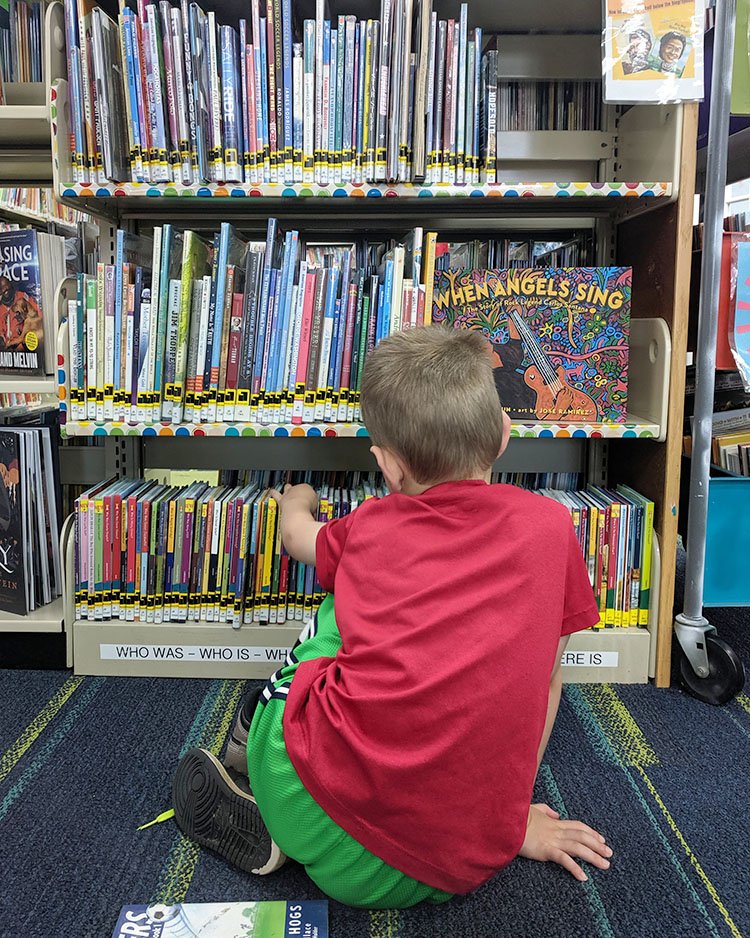
5. Use your local library
The library is the original sharing economy, and it deserves more credit than it gets as a community resilience resource.
Most people know they can borrow books. Fewer people know about the audiobooks, streaming services, museum passes, seed libraries, tool lending programs, digital magazine access, cake pans, telescopes, and free programming that many library systems now offer. Before you subscribe to another service or buy another thing, check whether your library has it first.
Libraries are also under real financial and political pressure right now. Using them actively and advocating for them when their funding comes up for debate are among the most meaningful ways to protect a public institution that belongs to all of us.
[→ More on what your library likely offers that you’re not using yet.]
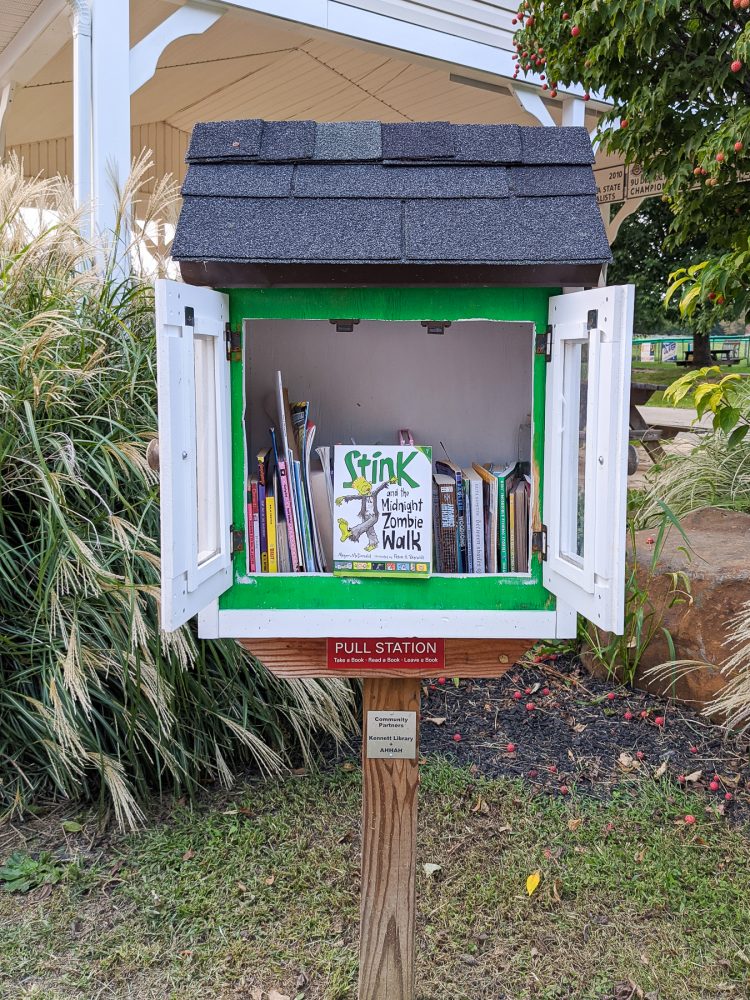
6. Set up or use a Little Free Library
Little Free Libraries are small neighborhood book exchanges. You can leave a book or take one with no expectation of payment or return. They’re genuinely good for building the small, recurring interactions that make a neighborhood feel like a neighborhood. If there’s one near you, use it regularly. If there isn’t, the Little Free Library organization sells kits and offers resources for building your own.
You can also learn more about caring for a Little Free Library and get tips from someone who stewarded a Little Free Library for quite some time.
Beyond books, some communities have expanded the concept to seed libraries, plant exchanges, and other small-scale neighborhood sharing. It’s definitely worth exploring what’s already near you.
7. Host or support a community pantry
Community pantries — small, hyperlocal free pantries where neighbors can leave or take food as needed — have spread significantly in recent years. Some are as simple as a plastic bin on a front porch. Others are full Little Free Pantry installations or community refrigerators that hold perishable food for neighbors who need it.
If there’s one in your area, support it consistently. One-time donations help, but regular donations ensure the community pantry provides reliable sustenance for those who need it. Before a vacation, drop off perishables from your fridge. When you overbuy at the farmers’ market, pass the extra along. When you cook a big batch of something, consider whether a neighbor could use a portion. If there isn’t one in your area and you have the means and interest, the Little Free Pantry organization has resources to help you get started.
8. Find or host a repair café or skill swap
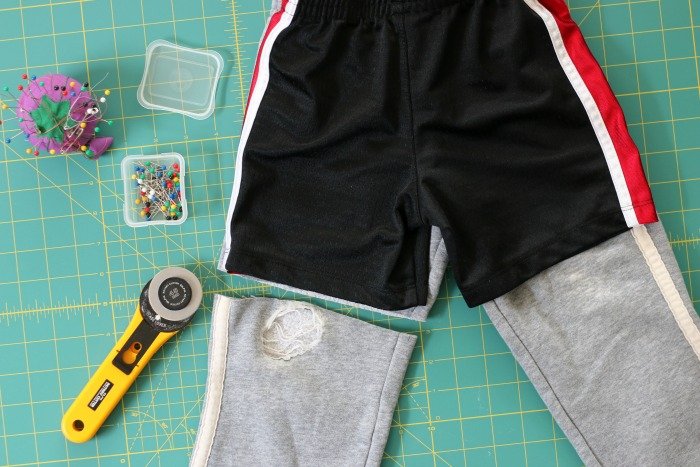
Repair cafés are community events where volunteers with skills in sewing, electronics, woodworking, bike mechanics, and other trades help neighbors repair broken items rather than replace them. They’ve grown significantly as a movement in the last few years. Environmental conviction, combined with the practical desire to stop throwing money away on things that could be fixed, has driven growth.
Beyond repair, the skill swap model applies broadly: if you know how to do something useful — cook a particular cuisine, speak another language, do basic carpentry, navigate a complicated bureaucratic process — you can share that knowledge with neighbors and receive in return. Check Meetup, your local library calendar, and community Facebook groups for repair events near you. If none exist, they’re relatively simple to organize and tend to attract exactly the kind of engaged neighbors you’d want to know.
9. Participate in or start a mutual aid network
Mutual aid networks are neighbor-to-neighbor support systems that coordinate help for community members who need it, from grocery runs for people who can’t leave home, to emergency childcare, to help after a job loss or a health crisis. They’ve grown significantly since the pandemic demonstrated both the need and the capacity of communities to meet it when organized.
Many cities and towns now have neighborhood mutual aid networks you can find through a quick search or through platforms like Mutual Aid Hub. If there’s one near you, joining, even as an occasional volunteer, puts you in a web of connection and support that pays dividends in both directions. If there isn’t one, Mutual Aid Hub and other organizations have resources to help start one.
This is the sharing economy at its most human: not trading things, but showing up for people.
10. Facebook Marketplace free listings
Facebook Marketplace is primarily known as a buying and selling platform, but many people use it simply to give things away. They list items as free for anyone who wants to pick them up. When something doesn’t find a home in my local Buy Nothing group, listing it free on Marketplace is a reliable second option. Items posted for free tend to move quickly, and it keeps usable things out of the landfill.
One more thing: start something if nothing exists
If you search for a Buy Nothing group, a tool library, a seed swap, or a community pantry in your area and come up empty, recognize that gap as an opportunity. The Buy Nothing Project has resources for administrators who want to start new groups. A tool library can start with a handful of neighbors and a shared document. A seed swap can happen in someone’s backyard.
Starting something is more work than joining something. It’s also how communities get built in places where they didn’t exist before. And the people who show up to help build it are often exactly the neighbors worth knowing.
If this resonated, I’d love for you to subscribe to Sage Neighbor, my weekly newsletter about small, practical acts that build community resilience one household at a time. Drop your email below to be added to the list!