What Knowing Your Neighbors Actually Looks Like
There’s a phrase that’s been circulating lately: “Everyone wants a village, but nobody wants to be a villager.” It’s a little uncomfortable because it’s true. How do you get back to knowing your neighbors today in a world that is so connected yet so isolated? And why does it matter?
We want neighbors who show up when things get hard. We want a community that holds us. We want a connection that’s warm, real, and reliable. And yet we hesitate to go first. We’re busy. We’re self-sufficient. We don’t want to impose. We wait for the village to appear, without quite being willing to build it ourselves.
I’ve felt this tension. And I’ve also stumbled, imperfectly, into something that looks like the other side of it.
The version of community that has made a difference in my life doesn’t look like an organized project. It looks like a text message on a snowy morning. It looks like brick pavers finding a second life on someone else’s porch. It looks like a Dyson vacuum that needed a home and found one across the street.
None of it was planned. All of it required being willing to show up as a villager first, slowly and over time.
What it actually looks like at our house
We have a neighbor down the street with a tractor. He’s plowed our driveway a few times over the years when it’s snowed significantly. We’ve given him cookies. We’ve given him bourbon. That’s the whole arrangement. There are no contracts, no Venmo requests, just a neighborly exchange that works for everyone.
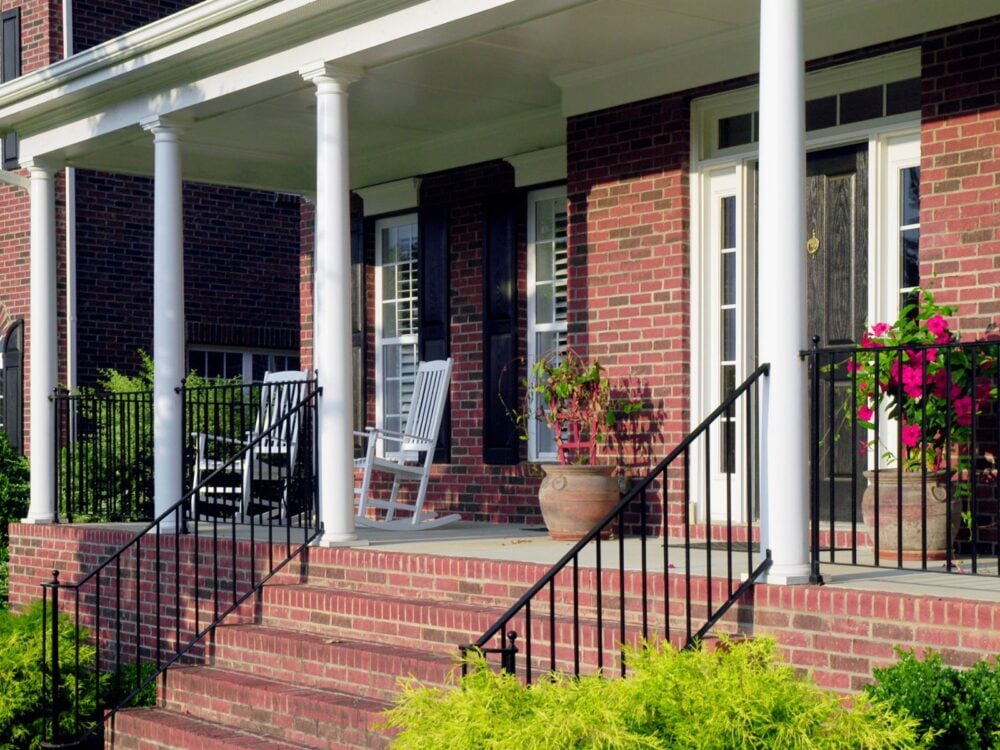
We have another neighbor who has helped us clean up fallen branches with his chainsaw more than once, including clearing my parents’ driveway after a storm. He gifted us a Dyson vacuum he no longer needed, still new, because he thought we could use it. We gave him a pile of brick pavers when we redid our landscaping, pavers he used to reinforce his porch. Those bricks would have gone to waste. Instead, they’re holding up part of someone’s home.
Across the street, there’s a neighbor who also runs our local Buy Nothing group. We’re not close friends in the hang-out-on-the-weekends sense, but we know we can count on each other. We share extra food before vacations rather than let it go bad. We swap garden harvests when one of us has more zucchini than any household should reasonably have. We occasionally walk through the neighborhood together. We’re friendly in a real way, not just a wave-from-the-car way.
None of this is dramatic. There’s no Knowing Your Neighbors playbook. There’s no singular moment when we became neighbors who help each other. It accumulated slowly, through small repeated acts.
Why knowing your neighbors is harder than it used to be
There are real structural reasons why most Americans don’t have this kind of relationship with their neighbors, and they’re worth naming.
We’ve built communities, both physical and cultural, that don’t require us to interact. Attached garages mean we can go from house to car to wherever we’re going without ever stepping onto a sidewalk or seeing our neighbors. Online shopping means we don’t run into each other at local stores often. Through remote work arrangements, we’re home more but somehow more isolated. Social media gives us a sense of connection without the inconvenience of physical proximity.
None of this is a character flaw. It’s just the water we swim in. The default in modern American life is not knowing your neighbors. You have to actively swim against it.
The good news is that actively swimming against it doesn’t have to look like hosting a block party or starting a neighborhood association. It can look like offering your extra brick pavers to the guy next door and seeing what happens.
How to start building it
Learn names first. Full names, not just “the guy with the yellow lab.” You can’t ask someone for help if you can’t address them as a person. This sounds embarrassingly basic, but it’s genuinely the foundation.
Join your local Buy Nothing group. This is the single most useful thing I’d recommend for people who want to build neighborly relationships but don’t quite know how to start. Buy Nothing groups create a structured, low-stakes reason to interact with the people near you — to ask for things, offer things, and show up at each other’s porches for pickups that sometimes turn into conversations. It’s also where I first got comfortable asking neighbors for things, a skill that doesn’t come naturally to most of us. [→ Here’s my complete guide to Buy Nothing groups for beginners.]
Offer things before you need to ask for things. The brick pavers, the garden harvest, the extra food before vacation. Offering first builds the relational account before you ever need to make a withdrawal. When you have something extra, think of your neighbors before you think of the trash.
Borrow before you buy. Before purchasing something you’ll use occasionally, like a tool, a piece of equipment, or a specialty kitchen gadget, ask around first. The ask itself is relationship-building, even when the answer is no.
Respond when people need something. When a neighbor posts in Buy Nothing, respond if you can help. When someone on your street is clearly struggling with something, offer. When there’s an opportunity to show up, show up. Reciprocity builds over time, but someone has to go first.
Keep the bar low. You don’t have to become best friends with everyone on your street. The goal isn’t intimacy; it’s a functional web of goodwill and mutual awareness. Knowing that you can call someone, and that they’d actually pick up, is enough. That’s what we have with our neighbors, and it turns out it’s quite a lot.
Why knowing your neighbors matters
This takes time. The neighbors I described didn’t become people I could count on overnight. It happened over years of small exchanges — cookies, pavers, vacuums, mail collection, chainsaw cleanup — that compounded into something that functions like a real safety net.
That safety net isn’t dramatic. It won’t make headlines. But it’s there when I need it.
Here’s what I keep coming back to: the village doesn’t appear on its own. It emerges when enough people decide to stop waiting for it and start building it, one small, unglamorous act at a time. The brick pavers. The borrowed tools. The cookies when someone plows your driveway.
We all want the village. The only way to get there is to be a villager first. Turns out, it’s not that hard to start. You just have to start.
If this resonated, I’d love for you to subscribe to Sage Neighbor, my weekly newsletter about small, practical acts that build community resilience one household at a time. Drop your email below to be added to the list!